
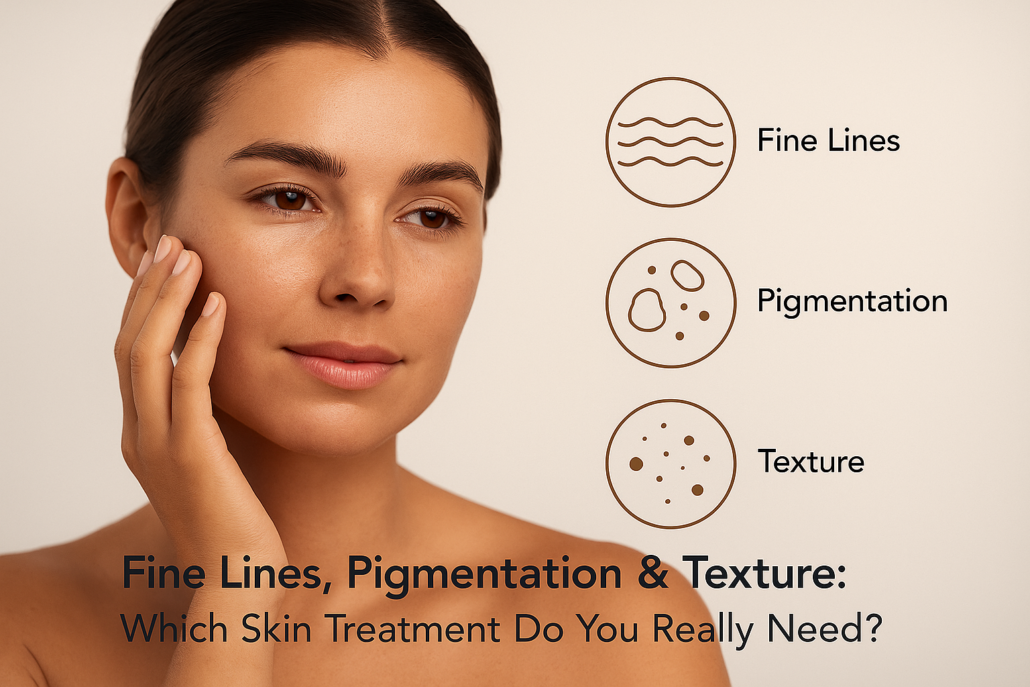
Fine Lines, Pigmentation & Texture: Which Skin Treatment Do You Really Need?
Fine lines, pigmentation, and rough texture are often discussed together, but they are not the same problem—and they do not respond to the same solution. The fastest path to visible improvement is identifying your primary concern, understanding the cause, and choosing treatments that target the correct layer of the skin.
Fine lines: what causes them
Fine lines develop as collagen and elastin gradually decline and as repeated facial expression patterns etch into the skin over time.
Dehydration and sun exposure make lines appear more prominent by reducing skin bounce and increasing surface roughness.
Treatment usually focuses on improving skin quality, supporting collagen, and—when appropriate—softening overactive expression lines.
Pigmentation: why dark spots form
Pigmentation is caused by uneven melanin production. In Australia, high UV exposure is a major driver of sunspots and uneven tone.
Hormonal shifts can contribute to melasma, while inflammation (such as acne) can leave post-inflammatory dark marks.
Pigmentation plans must always include strict sun protection, because even excellent treatments struggle without daily SPF.
Texture: what ‘rough skin’ really means
Texture concerns include enlarged pores, uneven surface, acne scarring, and a dull, bumpy feel.
Texture issues are often linked to slower cell turnover and collagen disruption below the surface.
Treatments that stimulate controlled renewal and collagen remodelling generally produce the best improvements in texture.
Why one treatment rarely fixes everything
A treatment that targets pigmentation may not address deep texture changes, and a collagen-focused treatment may not fully correct sunspots.
Most patients benefit from a staged plan: start with skin health and barrier support, then target the dominant concern first, then refine secondary concerns.
How DrCosmetist chooses a treatment plan
Your clinician assesses skin type, sensitivity, lifestyle, and the balance of concerns. The plan may involve professional exfoliation, collagen-stimulating therapies, hydration support, and medical-grade home care.
The goal is natural-looking improvement with minimal irritation—so results are predictable and sustainable.
FAQs
What if I have all three concerns?
That’s very common. A staged approach typically delivers the best results: treat the dominant concern first while supporting overall skin health.
How important is sunscreen for pigmentation?
It’s essential. Without daily SPF, pigmentation is likely to persist or return even after successful treatment.
Will treatments make my skin sensitive?
Some treatments can temporarily increase sensitivity. Your clinician will plan timing, aftercare, and product selection to minimise risk.
Next Step
Not sure what your skin needs most? Book a personalised assessment at DrCosmetist. We’ll map the right treatment pathway for fine lines, pigmentation, and texture—based on your skin, not guesswork.