
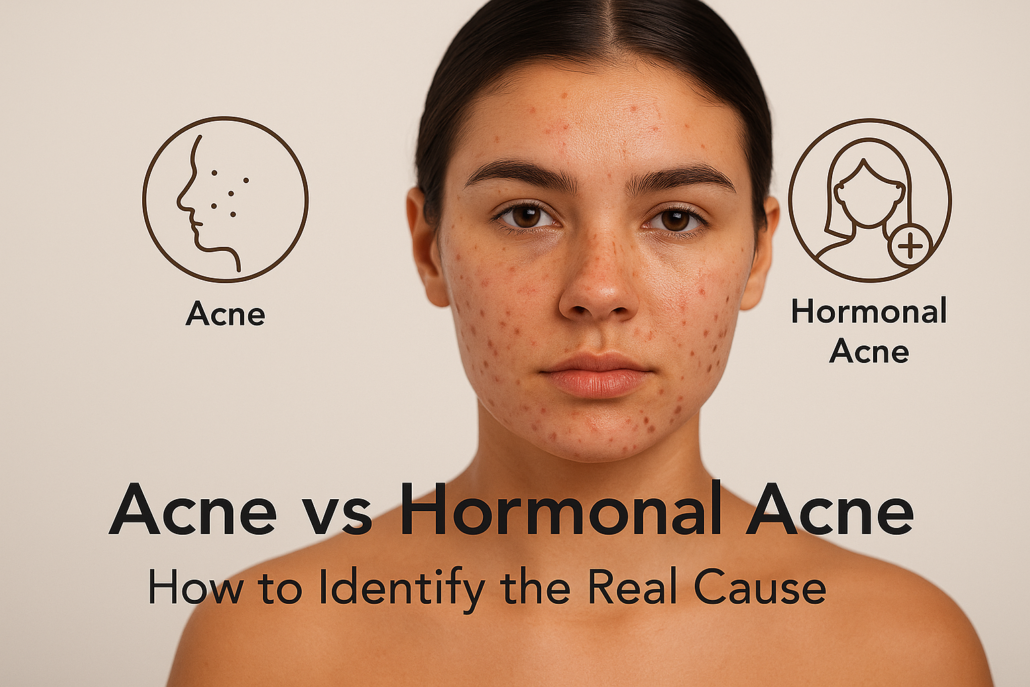
Acne vs Hormonal Acne: How to Identify the Real Cause
Acne is not one single condition. Two people can have similar-looking breakouts but completely different triggers, which is why “doing everything right” with skincare sometimes still fails. One of the most common reasons adult acne persists is an underlying hormonal driver. The key to clearer skin is identifying the pattern, confirming the trigger, and choosing a treatment plan that matches your acne type—without damaging your skin barrier.
What hormonal acne typically looks like
Hormonal acne is commonly concentrated around the lower face—chin, jawline, and lower cheeks—and often forms deeper, tender bumps that can linger.
Many patients notice a predictable flare pattern around menstrual cycles, stressful periods, or major hormonal shifts such as postpartum changes, perimenopause, or stopping/starting contraception.
Because the trigger is internal, strong cleansers and harsh spot treatments may briefly reduce oil but rarely stop the cycle of inflammation.
What “traditional” (non-hormonal) acne looks like
Non-hormonal acne is more closely linked to clogged pores, excess oil, acne bacteria, and inflammation at the follicle level.
It commonly appears in the T-zone (forehead, nose, central cheeks) as blackheads, whiteheads, and smaller inflamed pimples.
This acne type often responds well to a structured routine: gentle cleansing, topical retinoids, salicylic acid, and professional treatments that reduce congestion.
Why self-treatment often makes adult acne worse
Many people treat persistent acne by layering multiple active products (acids, retinoids, benzoyl peroxide) at the same time. If your skin barrier becomes irritated, redness and sensitivity increase—and acne can look worse.
Over-exfoliation can also trigger rebound oiliness and inflammation, increasing the risk of post-inflammatory hyperpigmentation (dark marks) and long-term scarring.
A medical plan focuses on controlling inflammation while protecting the barrier—so the skin can actually heal.
How DrCosmetist approaches acne diagnosis
A proper assessment looks at distribution, lesion type, scarring risk, and trigger patterns. Your clinician also reviews lifestyle and medical history that can influence acne (stress, sleep, diet patterns, medications, hair/skin changes).
If hormonal acne is suspected, treatment may include a combination strategy: medical-grade skincare plus targeted in-clinic therapies and, when appropriate, prescription options guided by a clinician.
Treatments commonly used for clearer skin
Medical-grade skincare: barrier-supportive cleansers and moisturisers plus evidence-based actives prescribed in the right sequence.
Professional exfoliation and resurfacing: clinic peels and acne-safe treatments help clear congestion and smooth texture while respecting sensitivity.
Scar and mark prevention: early intervention reduces inflammation and helps minimise pigmentation and scarring that can linger long after breakouts stop.
FAQs
How long does it take to see results?
Most patients see early improvement within 4–8 weeks, but consistent treatment over 3–4 months is usually required for stable control.
Can acne be treated if I have sensitive skin?
Yes. The plan should be barrier-first, using gentle actives at medical strength and appropriate spacing to avoid irritation.
Why does my acne return in the same spots?
Recurring lower-face lesions often suggest a hormonal driver; a clinician can confirm patterns and tailor treatment accordingly.
Next Step
If your acne keeps returning—or you suspect it’s hormonal—book an acne consultation at DrCosmetist. You’ll receive a personalised plan designed for long-term control, fewer marks, and healthier skin.

