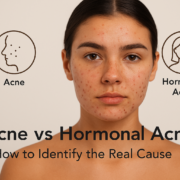
Acne vs Hormonal Acne

Acne vs Hormonal Acne: How to Identify the Real Cause

Acne is not one single condition. Two people can have similar-looking breakouts but completely different triggers, which is why “doing everything right” with skincare sometimes still fails. One of the most common reasons adult acne persists is an underlying hormonal driver. The key to clearer skin is identifying the pattern, confirming the trigger, and choosing a treatment plan that matches your acne type—without damaging your skin barrier.

What hormonal acne typically looks like

Hormonal acne is commonly concentrated around the lower face—chin, jawline, and lower cheeks—and often forms deeper, tender bumps that can linger.

Many patients notice a predictable flare pattern around menstrual cycles, stressful periods, or major hormonal shifts such as postpartum changes, perimenopause, or stopping/starting contraception.

Because the trigger is internal, strong cleansers and harsh spot treatments may briefly reduce oil but rarely stop the cycle of inflammation.

What “traditional” (non-hormonal) acne looks like

Non-hormonal acne is more closely linked to clogged pores, excess oil, acne bacteria, and inflammation at the follicle level.

It commonly appears in the T-zone (forehead, nose, central cheeks) as blackheads, whiteheads, and smaller inflamed pimples.

This acne type often responds well to a structured routine: gentle cleansing, topical retinoids, salicylic acid, and professional treatments that reduce congestion.

Why self-treatment often makes adult acne worse

Many people treat persistent acne by layering multiple active products (acids, retinoids, benzoyl peroxide) at the same time. If your skin barrier becomes irritated, redness and sensitivity increase—and acne can look worse.

Over-exfoliation can also trigger rebound oiliness and inflammation, increasing the risk of post-inflammatory hyperpigmentation (dark marks) and long-term scarring.

A medical plan focuses on controlling inflammation while protecting the barrier—so the skin can actually heal.

How DrCosmetist approaches acne diagnosis

A proper assessment looks at distribution, lesion type, scarring risk, and trigger patterns. Your clinician also reviews lifestyle and medical history that can influence acne (stress, sleep, diet patterns, medications, hair/skin changes).

If hormonal acne is suspected, treatment may include a combination strategy: medical-grade skincare plus targeted in-clinic therapies and, when appropriate, prescription options guided by a clinician.

Treatments commonly used for clearer skin

Medical-grade skincare: barrier-supportive cleansers and moisturisers plus evidence-based actives prescribed in the right sequence.

Professional exfoliation and resurfacing: clinic peels and acne-safe treatments help clear congestion and smooth texture while respecting sensitivity.

Scar and mark prevention: early intervention reduces inflammation and helps minimise pigmentation and scarring that can linger long after breakouts stop.

FAQs

How long does it take to see results?
Most patients see early improvement within 4–8 weeks, but consistent treatment over 3–4 months is usually required for stable control.

Can acne be treated if I have sensitive skin?
Yes. The plan should be barrier-first, using gentle actives at medical strength and appropriate spacing to avoid irritation.

Why does my acne return in the same spots?
Recurring lower-face lesions often suggest a hormonal driver; a clinician can confirm patterns and tailor treatment accordingly.

Next Step

If your acne keeps returning—or you suspect it’s hormonal—book an acne consultation at DrCosmetist. You’ll receive a personalised plan designed for long-term control, fewer marks, and healthier skin.
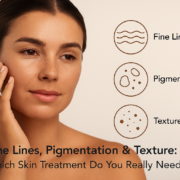

Fine Lines, Pigmentation & Texture

Fine Lines, Pigmentation & Texture: Which Skin Treatment Do You Really Need?

Fine lines, pigmentation, and rough texture are often discussed together, but they are not the same problem—and they do not respond to the same solution. The fastest path to visible improvement is identifying your primary concern, understanding the cause, and choosing treatments that target the correct layer of the skin.

Fine lines: what causes them

Fine lines develop as collagen and elastin gradually decline and as repeated facial expression patterns etch into the skin over time.

Dehydration and sun exposure make lines appear more prominent by reducing skin bounce and increasing surface roughness.

Treatment usually focuses on improving skin quality, supporting collagen, and—when appropriate—softening overactive expression lines.

Pigmentation: why dark spots form

Pigmentation is caused by uneven melanin production. In Australia, high UV exposure is a major driver of sunspots and uneven tone.

Hormonal shifts can contribute to melasma, while inflammation (such as acne) can leave post-inflammatory dark marks.

Pigmentation plans must always include strict sun protection, because even excellent treatments struggle without daily SPF.

Texture: what ‘rough skin’ really means

Texture concerns include enlarged pores, uneven surface, acne scarring, and a dull, bumpy feel.

Texture issues are often linked to slower cell turnover and collagen disruption below the surface.

Treatments that stimulate controlled renewal and collagen remodelling generally produce the best improvements in texture.

Why one treatment rarely fixes everything

A treatment that targets pigmentation may not address deep texture changes, and a collagen-focused treatment may not fully correct sunspots.

Most patients benefit from a staged plan: start with skin health and barrier support, then target the dominant concern first, then refine secondary concerns.

How DrCosmetist chooses a treatment plan

Your clinician assesses skin type, sensitivity, lifestyle, and the balance of concerns. The plan may involve professional exfoliation, collagen-stimulating therapies, hydration support, and medical-grade home care.

The goal is natural-looking improvement with minimal irritation—so results are predictable and sustainable.

FAQs

What if I have all three concerns?
That’s very common. A staged approach typically delivers the best results: treat the dominant concern first while supporting overall skin health.

How important is sunscreen for pigmentation?
It’s essential. Without daily SPF, pigmentation is likely to persist or return even after successful treatment.

Will treatments make my skin sensitive?
Some treatments can temporarily increase sensitivity. Your clinician will plan timing, aftercare, and product selection to minimise risk.

Next Step

Not sure what your skin needs most? Book a personalised assessment at DrCosmetist. We’ll map the right treatment pathway for fine lines, pigmentation, and texture—based on your skin, not guesswork.

Microneedling Explained Benefits

Microneedling Explained: Benefits, Downtime & Who It’s Best For

Microneedling is a dermatologist-favourite treatment for improving skin texture, supporting collagen production, and softening the appearance of acne scarring and fine lines. When performed in a medical setting, it offers strong results with a relatively short downtime compared to more aggressive resurfacing.

How microneedling works

Microneedling creates controlled micro-channels in the skin using fine, sterile needles. The skin responds by activating repair pathways and producing new collagen and elastin.

Over time, this remodelling helps improve texture, firmness, and the look of shallow scars. It can also enhance absorption of certain clinician-selected serums used during treatment.

Concerns microneedling can improve

Acne scarring and post-acne texture changes, especially when scarring is mild to moderate.

Enlarged pores and uneven skin surface.

Fine lines and early skin laxity by supporting collagen density.

General dullness by encouraging healthier skin turnover and improved skin quality.

What the appointment feels like

A topical anaesthetic is typically used to improve comfort. Most patients describe the sensation as pressure or a vibrating scratch rather than pain.

Treatment intensity is adjusted to the area and your tolerance, and the protocol can be adapted for sensitive skin types.

Downtime and aftercare

Expect redness for 24–48 hours, similar to mild sunburn. Some patients experience mild swelling or a ‘sandpaper’ feel that settles quickly.

Avoid harsh actives for several days, prioritise hydration, and use strict sun protection during the recovery period.

Your clinician will provide a tailored aftercare plan to protect the barrier and support collagen remodelling.

How many sessions you may need

Microneedling works best as a course. Many patients do 3–6 sessions, spaced several weeks apart, depending on scarring, texture, and goals.

Results build gradually and can continue improving for months as collagen remodelling progresses.

Why medical microneedling matters

Depth, technique, and hygiene are critical. Incorrect settings or poor protocols can lead to irritation, pigmentation, or ineffective treatment.

At DrCosmetist, microneedling is selected and tailored after an assessment to ensure safe depth and appropriate scheduling for your skin.

FAQs

Is microneedling safe for darker skin tones?
When performed correctly with suitable depth and aftercare, microneedling can be a good option because it does not rely on heat.

Can I wear makeup after treatment?
Many clinics recommend waiting at least 24 hours. Follow your clinician’s guidance to reduce irritation and infection risk.

Will microneedling remove deep scars?
It can significantly improve the appearance of many scars, but deep scarring may need combination treatment strategies.

If you’re considering microneedling for texture, pores, or acne scarring, book a consultation at DrCosmetist. We’ll assess your skin and design a safe course that delivers natural, progressive improvement.

Skin Boosters

Skin Boosters: The Secret to Long-Lasting Hydration and Improved Skin Quality

If your goal is healthier, more luminous skin—not a change in facial shape—skin boosters are one of the most effective options. They hydrate the skin from within, improving texture and elasticity in a subtle, natural-looking way. For many patients, skin boosters are the bridge between skincare and injectables that reshape volume.

What skin boosters are (and are not)

Skin boosters are injectable hyaluronic acid treatments placed superficially to improve hydration and skin quality.

They are not the same as volumising fillers. Skin boosters do not create cheeks or change facial structure; they improve the skin itself—glow, softness, and fine lines.

Because hyaluronic acid binds water, improvements often look like healthier, more resilient skin rather than an obvious ‘done’ result.

Who benefits most

Patients with dehydration, dullness, crepey texture, or fine lines that do not respond to topical products alone.

People who want gradual improvement with minimal downtime, especially in areas like the cheeks, under-eyes (case dependent), neck, and décolletage.

Skin boosters can also complement collagen-stimulating treatments by improving the skin environment and supporting recovery.

What results to expect

Improved hydration and bounce, leading to a smoother appearance and reduced ‘tired’ look.

Refined texture and a more even surface over time as the skin becomes better hydrated and supported.

Subtle softening of fine lines, particularly dehydration-related lines, as the skin holds water more effectively.

Treatment experience and downtime

Appointments are typically quick. A numbing cream may be used depending on the protocol and area treated.

Mild swelling, small bumps, or pinpoint bruising can occur and usually resolves over several days.

Results build over weeks, and many patients benefit from a short course followed by maintenance sessions.

Why injector technique matters

Correct placement depth, product selection, and dosing are critical. Over-treatment can cause puffiness, while under-treatment reduces longevity.

At DrCosmetist, the plan is tailored based on your skin thickness, hydration needs, and overall treatment goals to keep results natural.

FAQs

How long do skin boosters last?
Many patients see benefits for several months. Longevity varies by product, area treated, and individual skin characteristics.

Are skin boosters the same as fillers?
No. Fillers add volume and shape; skin boosters improve hydration and skin quality without changing facial structure.

Can I combine boosters with other treatments?
Often yes. Your clinician will time treatments to minimise irritation and optimise results.

If you want long-lasting hydration and a healthier glow, book a skin booster consultation at DrCosmetist. We’ll assess your skin and recommend the best approach for subtle, natural improvement.

Seasonal Skincare in Australia

Seasonal Skincare in Australia: How to Protect Your Skin Year-Round

Australia’s climate is demanding on skin. High UV levels, heat, humidity, and seasonal shifts can accelerate pigmentation, dehydration, and premature ageing. A year-round strategy—adjusted for the season—keeps the barrier healthy and reduces flare-ups in acne-prone or sensitive skin.

Summer: UV, heat, and pigmentation risk

UV exposure is the single biggest driver of premature ageing and pigmentation. Daily broad-spectrum SPF is essential, not optional.

Heat and humidity can increase oil production, congestion, and inflammation. Lightweight textures and consistent cleansing help reduce breakouts without stripping the barrier.

If you are pigment-prone, hats, shade, and reapplication of sunscreen are as important as any brightening product.

Winter: barrier dryness and sensitivity

Cooler weather, indoor heating, and wind can increase dryness and sensitivity, especially on the cheeks and around the mouth.

Barrier-repair moisturisers and gentle cleansers become more important, and harsh actives may need spacing to avoid irritation.

If eczema or dermatitis flares in winter, early management protects the skin and reduces long recovery periods.

Transitional seasons: flare-ups and unpredictability

Spring and autumn can trigger mixed patterns—oiliness in the T-zone with dryness elsewhere, or fluctuating sensitivity.

This is a good time for a skincare review: adjust active frequency, ensure SPF consistency, and support hydration.

Treatments and timing

Some treatments are best planned around seasons and lifestyle. For example, strong sun exposure may influence the timing of corrective pigmentation work.

A clinician can help plan treatment courses so you get results while minimising risk and downtime.

How DrCosmetist builds seasonal plans

We assess your baseline skin type, your seasonal triggers, and your goals (pigmentation, acne control, texture, ageing).

Your plan may include in-clinic maintenance plus a simplified home routine that adapts across seasons while protecting the barrier and supporting consistent results.

FAQs

Do I need sunscreen in winter?
Yes. UV exposure still occurs, and cumulative exposure drives pigmentation and ageing over time.

Should I change my moisturiser seasonally?
Often yes. Many people need lighter hydration in summer and more barrier support in winter.

Can seasonal changes trigger acne?
Yes. Heat, sweat, and product changes can affect congestion and inflammation.

If your skin changes with the seasons—pigmentation in summer, dryness in winter, or flare-ups during transitions—book a seasonal skincare consultation at DrCosmetist. We’ll tailor a year-round plan that protects your skin and supports long-term results.

Facial Aesthetic Consultation

Facial Aesthetic Consultation: What to Expect During Your First Visit

A facial aesthetic consultation is the first and most important step on your cosmetic journey. Instead of guessing which treatment you need, a consultation allows a qualified doctor to examine your skin, understand your concerns, and design a treatment plan tailored to your goals. At DrCosmetist, every consultation is structured, medically focused, and centred around natural results.

What Is a Facial Aesthetic Consultation?

A facial aesthetic consultation is a detailed assessment of your face, skin quality, and facial proportions. The doctor reviews your medical history, lifestyle, and concerns before suggesting any treatment. It is not a quick sales appointment – it is a professional evaluation to determine what is safe, realistic, and suitable for you.

Why a Consultation Matters

Every Face Ages Differently

Sun exposure, genetics, stress, and lifestyle all affect how your skin changes over time. A consultation helps identify the areas that need support, such as loss of volume, fine lines, pigmentation, or texture issues.

Safety First

Your doctor reviews your medical history, allergies, medications, and previous treatments to ensure that any procedure recommended is safe for you.

Personalised Treatment Plan

Instead of one-size-fits-all treatments, you receive a plan customised to your skin type, age, and goals. This may include injectables, skin rejuvenation, medical-grade skincare, or a combination approach.

What Happens During the Consultation?

1. Skin and Facial Analysis

The doctor examines your skin texture, tone, elasticity, pores, fine lines, and facial balance. Areas such as the eyes, jawline, cheeks, and neck are carefully assessed.

2. Discussion of Concerns and Goals

You can openly talk about anything that bothers you – tired-looking eyes, wrinkles, uneven tone, loss of volume, or preventive anti-ageing. This conversation guides your treatment plan.

3. Medical History Review

The doctor asks about your medical conditions, medications, allergies, pregnancy status, and previous cosmetic procedures. This reduces the risk of complications.

4. Treatment Options Explained

Based on the assessment, suitable options are explained. These may include anti-wrinkle injections, dermal fillers, skin rejuvenation, chemical peels, microneedling, or medical skincare. The benefits, downtime, and expected results are discussed clearly.

5. Personalised Plan and Next Steps

You leave with a recommended plan that outlines which areas to treat, how many sessions are ideal, and what kind of results to expect. There is no pressure to decide on the spot – you can take time to think about it.

What DrCosmetist Offers

At DrCosmetist, consultations are:

  • Doctor-led and medically focused
  • Honest and educational
  • Designed for natural, balanced results
  • Centred on long-term skin health

You are encouraged to ask questions so you fully understand every step in your aesthetic journey.

FAQs

How long does a consultation take?
Most consultations take around 20–30 minutes, depending on your concerns.

Do I have to book a treatment on the same day?
No. You are welcome to take your time and book later.

Is there any downtime?
No. The consultation itself has no downtime – it is a discussion and assessment only.

A facial aesthetic consultation is the safest way to start your cosmetic journey. With expert assessment and a personalised plan, you can achieve refreshed, natural-looking results instead of guessing which treatments to try. At DrCosmetist, your comfort, safety, and confidence come first.

Ready to begin? Book your facial aesthetic consultation at DrCosmetist and take the first step towards healthier, rejuvenated skin.

Skin Rejuvenation Treatments: A Complete Guide to Brighter, Younger-Looking Skin

Skin rejuvenation treatments are designed to restore brightness, smoothness, and firmness to tired or ageing skin. Whether you are noticing fine lines, dullness, pigmentation, or texture changes, modern cosmetic dermatology offers safe, effective ways to refresh your complexion. At DrCosmetist, skin rejuvenation is personalised to your skin type and long-term goals.

What Is Skin Rejuvenation?

Skin rejuvenation refers to a range of treatments that repair damage, stimulate collagen, and improve overall skin quality. These treatments target concerns such as:

  • Fine lines and wrinkles
  • Uneven tone and pigmentation
  • Acne scars and texture
  • Dull or tired-looking skin
  • Loss of firmness

Why Skin Changes Over Time

As we age, collagen and elastin levels decline, cell turnover slows, and sun exposure builds up damage. Lifestyle factors such as stress, diet, and sleep also affect the skin. Over time, this leads to thinner, drier, less resilient skin with visible lines and uneven tone.

Popular Skin Rejuvenation Treatments

Chemical Peels

Chemical peels use carefully selected acids to remove damaged outer layers of skin. They help reduce pigmentation, smooth texture, and brighten the complexion. Peels can be very gentle or more intensive depending on your needs.

Microneedling

Microneedling uses very fine needles to create controlled micro-channels in the skin. This stimulates collagen production and helps improve fine lines, scars, and texture. It can also enhance the absorption of active serums.

Skin Boosters and Hydration Therapy

Skin boosters deliver hydrating ingredients like hyaluronic acid into the skin to improve glow, elasticity, and smoothness. These treatments are ideal for dry or tired-looking skin.

Anti-Wrinkle Injections and Fillers

In some cases, skin rejuvenation includes treating deeper lines and volume loss. Anti-wrinkle injections soften expression lines, while fillers restore volume to areas such as cheeks, lips, and under-eyes for a more youthful structure.

Medical-Grade Facials

Custom facials using clinical products combine cleansing, exfoliation, hydration, and sometimes LED therapy. They are excellent maintenance treatments and support other rejuvenation procedures.

What to Expect from a Treatment Plan

At DrCosmetist, skin rejuvenation usually involves a series of sessions rather than a single treatment. You may be recommended:

  • A course of peels or microneedling sessions
  • Hydration or skin booster treatments
  • Medical-grade skincare to use at home
  • Maintenance facials at regular intervals

This layered approach ensures long-lasting, natural-looking results.

What DrCosmetist Offers

Every treatment plan at DrCosmetist starts with a professional skin assessment. Your doctor will:

  • Identify your key concerns
  • Assess your skin type and sensitivity
  • Explain suitable treatment options
  • Design a gradual, safe rejuvenation plan

FAQs

How many sessions will I need?
Most patients benefit from three to six sessions, depending on their goals and starting point.

Is there downtime?
Some treatments cause mild redness or flaking for a few days, while others have no downtime. Your doctor will explain this in advance.

Skin rejuvenation is not about looking artificial – it is about restoring a healthy, radiant, and refreshed appearance. With the right combination of treatments and skincare, your skin can look brighter, smoother, and more youthful. DrCosmetist offers personalised, doctor-led rejuvenation plans focused on safety and natural results.

Ready to refresh your skin? Book a skin rejuvenation consultation with DrCosmetist and discover the best plan for your complexion.

Fine Lines, Pigmentation & Texture: Which Skin Treatment Do You Really Need?

Fine lines, pigmentation, and uneven texture are some of the most common skin concerns. Although they can appear at the same time, they often have different causes and respond to different treatments. Choosing the right option can be confusing without professional guidance. This article explains how to tell these concerns apart and which treatments may be best for your skin at DrCosmetist.

Understanding Your Skin Concerns

Fine Lines and Wrinkles

Fine lines are shallow creases that form as collagen breaks down and the skin loses elasticity. They often appear around the eyes, forehead, and mouth and may deepen into wrinkles over time.

Pigmentation and Dark Spots

Pigmentation occurs when certain areas of the skin produce more melanin than others. Common examples include sunspots, melasma, and dark marks left behind after acne.

Texture Issues

Texture concerns include roughness, enlarged pores, acne scars, and bumpy or uneven skin. These can result from past acne, slow cell turnover, or reduced collagen.

Why These Problems Occur

Ageing, sun exposure, hormonal changes, lifestyle, and genetics all contribute to visible changes in the skin. Repeated facial expressions create fine lines, UV rays cause pigmentation, and inflammation from acne can disrupt texture.

Which Treatment Do You Need?

For Fine Lines and Early Wrinkles

  • Anti-wrinkle injections to soften expression lines
  • Microneedling to stimulate collagen
  • Skin boosters for hydration and plumpness
  • Medical-grade skincare with retinol and peptides

For Pigmentation and Uneven Tone

  • Chemical peels to fade sun damage and dark spots
  • Microneedling with brightening serums for melasma or post-acne marks
  • Vitamin C, niacinamide, and pigment-correcting skincare
  • Daily sunscreen to prevent pigmentation from returning

For Texture and Acne Scars

  • Microneedling to remodel collagen and soften scars
  • Chemical peels to smooth roughness and refine pores
  • Hydrating facials to support barrier repair
  • Targeted skincare to regulate oil and reduce congestion

Why Personalised Assessment Matters

Many patients have a combination of fine lines, pigmentation, and texture concerns. The most effective approach is usually a customised plan combining treatments rather than a single procedure. At DrCosmetist, your skin is thoroughly assessed so that:

  • The main concern is identified and prioritised
  • Your skin type and sensitivity are respected
  • Treatments are staged for safety and comfort
  • Your expectations are matched with realistic outcomes

What DrCosmetist Offers

DrCosmetist provides doctor-led treatment plans that may include chemical peels, microneedling, skin boosters, anti-wrinkle injections, and curated skincare. The goal is balanced, natural improvement rather than over-treatment.

FAQs

Can I treat more than one concern at once?
Yes. Combination plans often work best and can be phased in over several visits.

How soon will I see results?
Some improvements are visible within a few weeks, while collagen-stimulating treatments continue to improve the skin over several months.

Fine lines, pigmentation, and texture problems may look similar on the surface, but they require different strategies for best results. A professional assessment at DrCosmetist helps you understand what your skin truly needs and which treatments will give you the most benefit.

Confused about which treatment to choose? Book a personalised skin consultation at DrCosmetist and let an expert guide you towards clearer, smoother, and more youthful-looking skin.

Male Skin & Hair Care

Male Skin & Hair Care: Why Men Need Dermatology More Than Ever

Men’s skin and hair have their own unique needs. Thicker skin, more active oil glands, regular shaving, and a higher likelihood of early hair loss all affect how men age and how their skin behaves. Despite this, many men still rely on basic grooming alone. Modern dermatology offers tailored solutions to help men manage acne, oiliness, sensitivity, and hair thinning effectively. At DrCosmetist, male skin and hair care is approached with practicality and subtle, natural-looking results in mind.

How Male Skin Is Different

  • Thicker skin: Men’s skin has more collagen, which delays fine lines but can lead to deeper wrinkles later.
  • More oil production: Higher sebum levels increase the risk of acne and shine.
  • Shaving impact: Regular shaving can cause irritation, ingrown hairs, and sensitivity.
  • Sun exposure: Men are often less consistent with sunscreen, leading to faster sun damage.

Common Skin Concerns in Men

  • Acne and blackheads, especially on the face and back
  • Oily or combination skin
  • Razor bumps and ingrown hairs
  • Rough texture and enlarged pores
  • Sunspots and early wrinkles

Hair and Scalp Concerns

Male pattern hair loss is extremely common and may begin as early as the twenties. Stress, genetics, hormones, and scalp health all play a role. Without early intervention, hair thinning tends to progress over time.

How Dermatology Helps Men

Acne and Oil Control

Men benefit from medical treatments that control breakouts without over-drying the skin. Options include prescription creams, peels, and professional facials.

Razor Bump and Irritation Solutions

Dermatologists can recommend shaving techniques, products, and treatments that minimise ingrown hairs and redness.

Anti-Ageing and Sun Damage

Subtle anti-wrinkle injections, skin boosters, and medical skincare can refresh the skin without looking obvious or “done.”

Hair Loss Management

Scalp assessments, microneedling, medical hair serums, and lifestyle advice can help slow or improve hair thinning when started early.

What DrCosmetist Offers Men

At DrCosmetist, male patients receive straightforward, realistic guidance and treatment options. Plans are tailored to suit busy lifestyles and preferences for natural-looking results.

Simple Skincare Routine for Men

  • Cleanser morning and night
  • Moisturiser suitable for skin type
  • Sunscreen every morning
  • Treatment products as recommended (for acne, ageing, or pigmentation)

FAQs

Are cosmetic treatments for men noticeable?
Treatments at DrCosmetist are designed to look subtle and refreshed rather than obvious.

Is it too late to treat hair loss?
Earlier is always better, but even established thinning may improve with the right plan.

Men’s skin and hair deserve the same level of care as women’s, tailored to their unique needs. With professional support, men can manage acne, protect against sun damage, and address hair loss with confidence. DrCosmetist offers discreet, effective dermatology solutions specifically suited to men.

Interested in improving your skin or hair? Book a male-focused consultation at DrCosmetist for a personalised, practical plan.

Hair & Scalp Health 101

Hair & Scalp Health 101: Understanding Hair Loss and Early Warning Signs

Hair loss can be worrying, whether it appears suddenly or gradually over time. The good news is that many types of hair thinning can be slowed, improved, or even reversed when treated early. Healthy hair begins with a healthy scalp, and understanding the early warning signs of hair loss is the first step towards protecting your hair. At DrCosmetist, hair and scalp health are approached with medical precision and personalised care.

What Is Hair Loss?

Hair loss, or alopecia, describes any situation where the hair becomes thinner, sheds excessively, or fails to grow back properly. It can affect the scalp evenly or appear as patches, receding areas, or a widening part line.

Common Causes of Hair Loss

  • Genetics: Male and female pattern hair loss are strongly inherited.
  • Hormonal changes: Pregnancy, menopause, thyroid imbalance, and conditions like PCOS can affect hair.
  • Stress and illness: Physical or emotional stress can shift hairs into a shedding phase.
  • Poor scalp health: Dandruff, dermatitis, and infections weaken hair follicles.
  • Nutrient deficiencies: Low iron, vitamin D, and other nutrients reduce hair strength.
  • Hair styling damage: Heat, tight hairstyles, and chemical treatments can break hair.

Early Warning Signs You Should Not Ignore

  • More hair than usual on your pillow or in the shower
  • A widening part line or visible scalp in photos
  • A receding hairline or thinning at the temples
  • Scalp itchiness, flaking, or redness
  • Hair that feels thinner, weaker, or breaks easily
  • Smaller, finer “baby” hairs replacing normal strands

Treatment Options for Hair and Scalp Health

Scalp Treatments

Targeted scalp therapies can reduce inflammation, control dandruff, and create the right environment for healthy hair growth.

Microneedling for Hair

Microneedling helps stimulate blood flow and growth factors around hair follicles. It can be combined with hair serums to support regrowth.

Medical-Grade Hair Serums

Specialist serums support follicle strength, reduce shedding, and improve hair quality over time.

Lifestyle and Nutritional Guidance

Stress management, a balanced diet, and addressing deficiencies are important for long-term hair health.

What DrCosmetist Offers

At DrCosmetist, a hair and scalp assessment includes:

  • A detailed history of your hair changes
  • Examination of the scalp and hair density
  • Discussion of possible triggers such as stress, diet, or hormones
  • A customised plan that may include in-clinic treatments, at-home products, and lifestyle advice

FAQs

Is all hair loss permanent?
No. Many forms of hair loss can be improved if treated early.

How long before I see results?
Hair growth cycles are slow, so it may take three to six months to notice visible improvement.

Hair loss is common, but you do not have to accept it without answers. By paying attention to early warning signs and seeking expert care, you can protect your hair and scalp for the long term. DrCosmetist offers personalised, evidence-based treatment plans designed to support stronger, healthier hair.

Concerned about hair loss? Book a hair and scalp consultation at DrCosmetist to understand the cause and explore your options.