
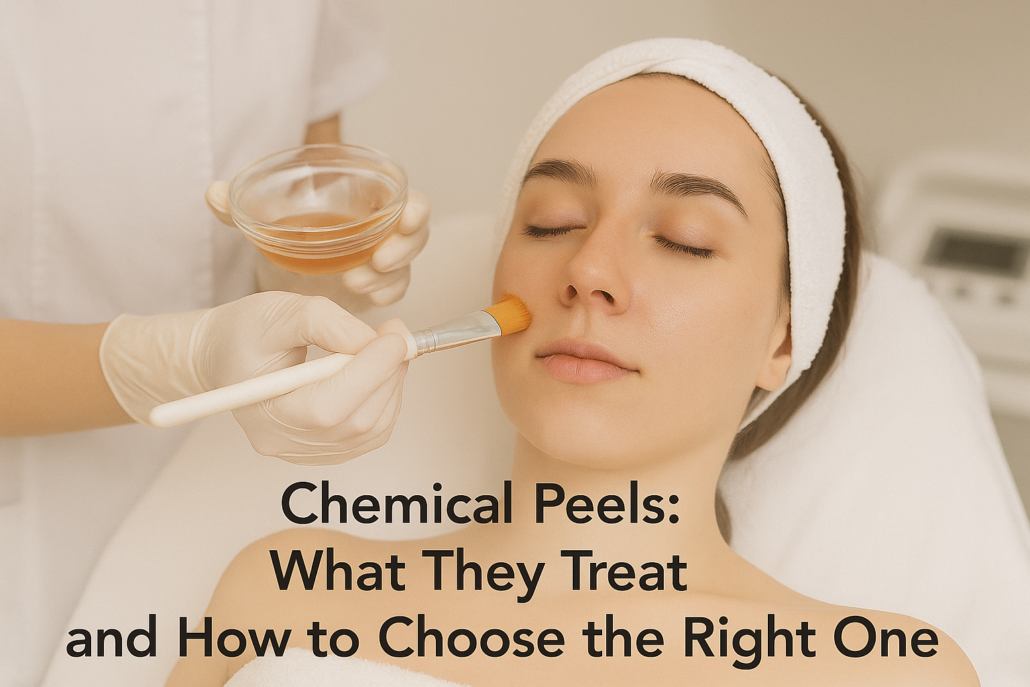
Chemical Peels: What They Treat and How to Choose the Right One
Chemical peels are one of the most effective, evidence-based treatments for improving acne, pigmentation, and overall skin tone. The key is choosing the correct peel type and strength for your skin—because the ‘best’ peel is the one that targets your concern without compromising the skin barrier.
What a chemical peel does
A chemical peel uses a controlled exfoliating solution to remove damaged surface cells and stimulate renewal.
As the skin sheds and rebuilds, many patients see smoother texture, brighter tone, fewer clogged pores, and a more even complexion.
Concerns peels can improve
Acne and congestion by reducing blocked pores and balancing oily areas.
Post-acne marks and uneven tone by accelerating turnover and supporting more even pigment distribution.
Sun damage and superficial pigmentation by lifting surface discolouration and improving brightness.
Fine-texture roughness by smoothing the upper layers of the skin.
Different peel depths and what they mean
Superficial peels: typically minimal downtime and ideal for maintenance, mild acne, and glow.
Medium-depth peels: more corrective, often used for stubborn pigmentation and more noticeable texture issues, with a longer recovery window.
The correct choice depends on your skin type, sensitivity, and whether you are prone to pigmentation.
What to expect after a peel
Some peels cause mild redness and light flaking; others cause more visible peeling for several days. Your clinician will explain what’s normal for your peel type.
Strict sun protection is essential. UV exposure after a peel can increase pigmentation risk and slow healing.
Home care is usually simplified immediately after treatment to protect the barrier and support recovery.
Why professional selection matters
At-home acids can be helpful, but clinic peels are stronger and need appropriate matching to skin tone and sensitivity.
A clinician evaluates your pigmentation risk, history of sensitivity, current skincare actives, and timing (holidays, events) to plan safely.
At DrCosmetist, peels are often part of a series and may be combined with other treatments for more comprehensive results.
FAQs
Can I get peels if I’m acne-prone?
Yes—many peels are excellent for acne and congestion when selected appropriately.
Will I peel a lot?
It depends on the peel depth. Some are ‘no-peel’ or very light flaking; others involve visible peeling for several days.
How many peels do I need?
Many patients do a course of 3–6 peels spaced weeks apart, depending on the concern and how your skin responds.
To choose the safest, most effective peel for your skin, book a chemical peel consultation at DrCosmetist. We’ll tailor the formula and schedule to your skin type and goals for predictable results.

