
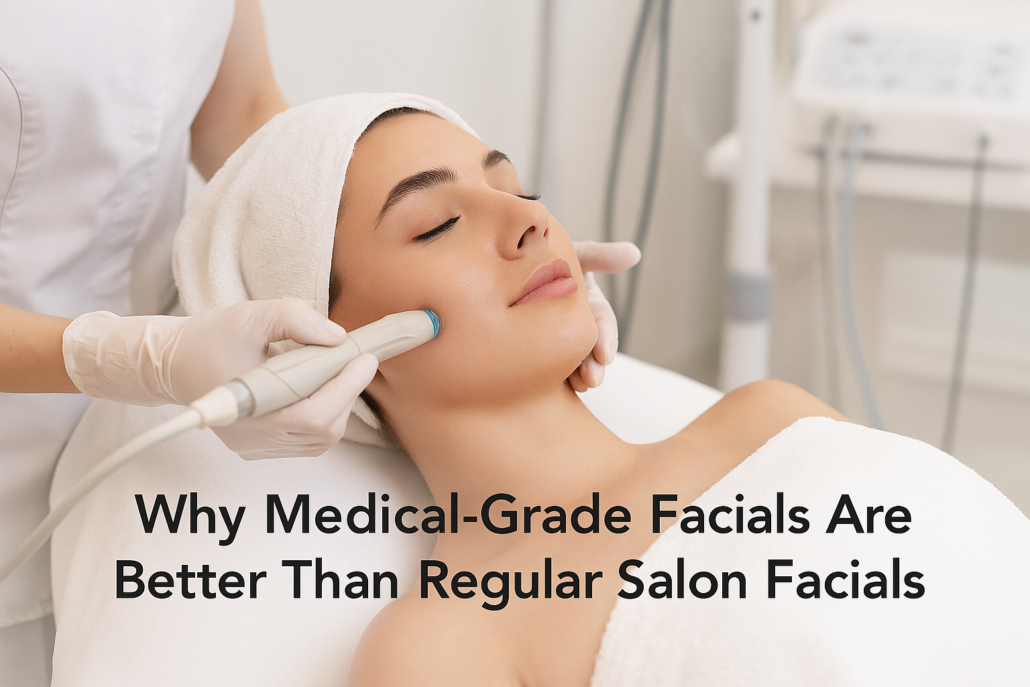
Why Medical-Grade Facials Are Better Than Regular Salon Facials
Facials can be relaxing, but not all facials are designed to improve skin health. Medical-grade facials are built around clinical skin goals—acne control, barrier repair, hydration, pigmentation support, and texture refinement—using professional protocols tailored to your skin’s needs.
What makes a facial ‘medical-grade’
Medical-grade facials use professional-strength ingredients and techniques selected after a skin assessment.
They prioritise safety for sensitive, acne-prone, or pigment-prone skin and are performed in a clinical environment with hygiene standards designed for skin procedures.
Because the treatment is customised, it can be gentle and barrier-supportive or more corrective depending on your goals and tolerance.
Where salon facials can fall short
Salon facials often follow a fixed routine. While they can feel good, they may not be appropriate for active acne, rosacea, eczema-prone skin, or significant pigmentation.
Aggressive extractions or unsuitable products can trigger inflammation, which may worsen breakouts or lead to post-inflammatory pigmentation.
If your skin is reactive, professional selection of ingredients and technique matters more than the ‘strength’ of the treatment.
Benefits you can expect from medical facials
Clearer pores and reduced congestion when acne-safe protocols are used consistently.
Improved hydration and glow through barrier-supportive ingredients and targeted hydration steps.
Smoother texture and more even tone over time as cell turnover normalises and inflammation decreases.
Better results from other treatments: medical facials can prepare the skin and maintain improvements between peels, microneedling, or injectable-based skin quality plans.
How often should you get a medical facial?
For maintenance and hydration, many patients benefit from monthly treatments. For acne or congestion, frequency may be higher initially and then spaced out.
The correct schedule depends on your skin type, sensitivity, and whether you are combining facials with other in-clinic treatments.
How DrCosmetist approaches facial plans
A clinician-led approach ensures your facial supports your medical and aesthetic goals without irritating the skin.
Home care is usually adjusted alongside facials so that active ingredients are timed correctly and the barrier remains stable.
FAQs
Will a medical facial cause peeling?
Most medical facials are designed for minimal downtime. If exfoliation is included, any flaking is typically mild and short-lived.
Can I get a facial if I have sensitive skin?
Yes. Medical-grade facials can be customised to focus on calming, hydration, and barrier repair.
Do facials help with acne scars?
Facials can improve texture and congestion, but scar-focused improvement often requires collagen-stimulating treatments such as microneedling.
If you want more than a temporary glow, book a medical-grade facial at DrCosmetist. We’ll tailor the protocol to your skin goals—acne control, hydration, pigmentation support, or overall skin quality.

